Artwork is often the most personal thing you own, and some pieces are irreplaceable. A painting that's been on your wall for years can be damaged in seconds by the wrong wrapping, a knock in transit or a sudden change in temperature. This guide explains how to pack and move paintings, framed prints, mirrors and sculpture, and when it's worth using a specialist fine art removals service.
What packing materials do you need to move artwork?
-
Acid-free tissue or glassine paper to protect painted surfaces
-
Bubble wrap for cushioning, used over a protective first layer
-
Cardboard corner protectors for frames
-
Low-tack masking tape for glass fronts
-
Picture and mirror boxes, or strong boxes a little larger than each piece
-
Foam board or thick cardboard to protect the front and back of framed pieces
-
Packing tape and a marker pen for sealing and labelling
Avoid using newspaper directly against artwork, as the ink can transfer. Our teams supply professional packing materials made for fragile items.
How should you prepare artwork before packing?
-
Photograph each piece from the front and back, including any existing marks or damage. This gives you a clear condition record.
-
Make an inventory with the title, artist, size and value of each piece.
-
Check your insurance. Make sure high-value pieces are covered while in transit and, if needed, in storage. Some policies need individual items listed.
-
Take down artwork carefully. Two people should lift large pieces, holding them by the sides of the frame rather than the top.
-
Remove wire and hooks that could scratch the back of other pieces.
How do you pack a painting for moving?
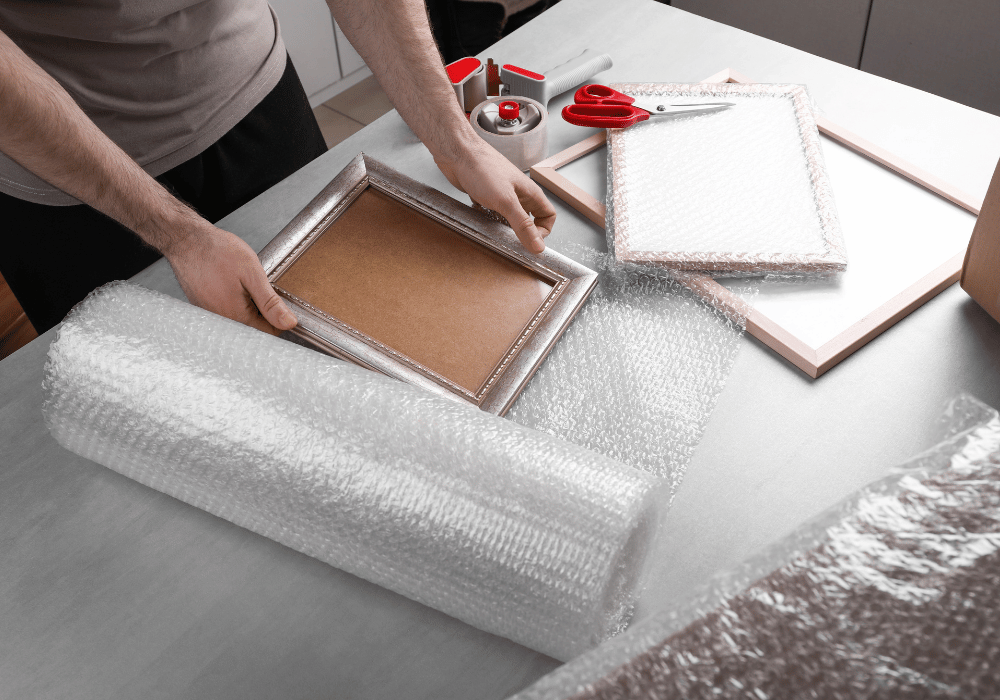
Oil and acrylic paintings, particularly unframed canvases, need extra care because the surface can be marked by anything pressed against it.
-
Cover the painted surface with a sheet of acid-free tissue or glassine. Never put bubble wrap directly on a painted surface, as it can leave marks.
-
Add cardboard corner protectors to the frame or stretcher.
-
Place a sheet of foam board or stiff cardboard over the front for protection against pressure.
-
Wrap the whole piece in bubble wrap, bubbles facing outwards, and secure it with tape on the wrap only.
-
Place the painting in a snug picture box and fill any gaps with crumpled packing paper so it can't move.
How do you pack framed prints and pictures with glass?
-
Apply low-tack masking tape in a cross or grid across the glass. If the glass breaks, the tape helps hold the pieces together and away from the artwork. Don't tape acrylic or perspex, as it can mark the surface.
-
Add corner protectors.
-
Wrap in packing paper, then bubble wrap.
-
Box the frame snugly, filling gaps so it can't shift.
How do you pack a mirror for moving?
Mirrors are packed in the same way as framed glass, with extra protection because of their weight.
-
Tape a cross on the glass with low-tack tape.
-
Fit corner protectors and wrap in packing paper and then bubble wrap.
-
Sandwich the mirror between two sheets of stiff cardboard and tape them together.
-
Use a mirror box sized to fit, and mark it clearly as fragile glass.
Large, heavy or ornate mirrors, such as gilt overmantels, are best packed and carried by a professional team.
How do you pack photographs and work on paper?
Unframed prints, drawings, watercolours and photographs are easily creased and marked. Place each one between sheets of acid-free tissue, then lay them flat between two pieces of stiff card or foam board, taped together at the edges. Keep them in a flat portfolio or box and never roll works on paper unless they were designed to be stored rolled.
How do you pack sculpture and three-dimensional pieces?
-
Wrap delicate parts such as arms, handles or thin sections first with tissue and then small pieces of bubble wrap.
-
Wrap the whole piece in several layers of bubble wrap.
-
Place it in a sturdy box with at least five centimetres of cushioning on every side.
-
For heavy or very fragile sculpture, a custom-made wooden crate gives the best protection.
How should you label packed artwork?
Mark every box clearly as fragile, with arrows showing which way up it should stand. Note which room it's going to in your new home. For valuable pieces, use a reference number that matches your inventory rather than writing the artist's name on the outside of the box.
How should artwork be transported?
-
Keep artwork upright, standing on its edge like books on a shelf, never lying flat with other items on top.
-
Load it separately from heavy furniture and boxes, and secure it so it can't slide.
-
Avoid extreme temperatures. Heat, cold and damp can damage paint, paper and frames, so don't leave artwork in a hot car or cold van for long periods.
-
Carry small, valuable pieces yourself if you're comfortable doing so.
How should you store artwork during a move?
If your new home isn't ready, or you're renovating, artwork needs a clean, dry and secure place with a stable temperature. Garages, lofts and sheds are usually too damp, cold or warm for paintings and works on paper. Keep pieces packed, upright and off the floor, and never stack heavy items against them. Our storage keeps your belongings secure until you're ready for delivery, and our guide to storage while moving house explains how it works.
How should you unpack and rehang artwork?
Let packed artwork adjust to the temperature of your new home for a few hours before unwrapping. Unpack on a clean, padded surface and check each piece against your photographs. Choose walls away from direct sunlight, radiators, fireplaces and damp, and use fixings rated for the weight of each piece.
Should you use a fine art removals service?
For valuable, large or delicate artwork, a specialist service is worth considering. Often described as white glove removals, it means a trained team handles your pieces from the wall to their new position. This usually includes condition checks, specialist wrapping, made-to-measure crates where needed, careful loading and rehanging in your new home.
A specialist service is a good idea if you have:
-
original paintings or limited-edition prints of significant value
-
antique frames or gilded mirrors
-
unframed canvases or works on paper
-
large or heavy pieces that need several people to lift
-
sculpture, ceramics or glass
At Hoults, we're experienced in handling high-value and delicate items, including fine art, antiques and pianos. Our packers use materials designed for fragile pieces, and we can store artwork safely if your new home isn't ready.
What should you consider when moving artwork in North East homes?
Many homes across the region bring their own challenges for moving art. Georgian terraces in Newcastle's Grainger Town and Victorian houses in Jesmond and Gosforth often have narrow, winding staircases and tall rooms with pieces hung high on the walls. Stone farmhouses and cottages in Northumberland and County Durham can have low doorways and thick walls that hold damp, which matters if artwork will stay in the property during building work.
Homes close to the coast, from Whitley Bay and Tynemouth up to the Northumberland coast, can be more humid, so keep paintings and works on paper away from exterior walls and check them for signs of damp when you unpack. We'll look at access and conditions at both properties when we survey your home, and plan how each piece will be moved.
Are you moving valuable artwork?
Tell us about your collection when you request your quote, and we'll plan how each piece will be packed and moved. We handle moves across the North East, throughout the UK and overseas, with secure storage available. Contact us for a free, no-obligation quote.
Moving artwork FAQs
Can you use bubble wrap on paintings?
Not directly on the painted surface. Cover the surface with acid-free tissue or glassine first, then add bubble wrap over it.
Should paintings be moved flat or upright?
Upright, standing on their edge. Laying paintings flat risks other items being stacked on top.
What is white glove moving?
It's a specialist removals service where a trained team packs, moves and places high-value or fragile items with extra care, often including crating and installation.
Do you move artwork from period properties in Newcastle and Northumberland?
Yes. We assess staircases, doorways and hanging heights during our survey and plan the packing and handling of each piece around them.