If you're moving house in Newcastle, there's a good chance you'll need somewhere to keep your belongings for a while. Maybe your completion dates don't line up, maybe you're renovating a terrace in Heaton before you move in, or maybe you're downsizing from a family home in Gosforth and you're not ready to part with everything just yet. Whatever the reason, self storage in Newcastle can take a lot of pressure off a busy move.
This guide walks you through how storage prices are worked out, which unit size you'll actually need, how to pack and choose a facility, and when storage really helps during a move. We've been moving families around the North East for generations, so we'll share what we've learned along the way.
What is self storage and how does it work?

Self storage is a simple idea: you rent a lockable unit inside a secure building, you bring your belongings, and you keep the key or access code. You decide when to visit, what goes in and what comes out. Most facilities in and around Newcastle offer rolling contracts, so you can store for a few weeks or a few years.
It's worth knowing that self storage is one of two main options. The other is containerised storage, where a removals firm packs your belongings into sealed wooden containers at your home and takes them to a monitored warehouse. You don't handle the boxes yourself, and everything comes back to your new address when you're ready. We'll explain the difference in more detail further down, because the right choice depends on how often you'll need to get at your things.
How are self storage prices worked out?
You'll rarely see one flat price for storage, because the cost depends on several factors. Understanding them helps you compare quotes fairly and avoid paying for space you don't need.
Unit size
Size is the biggest factor. Most facilities price by square footage, often quoted as a weekly or monthly rate. A small locker for a few boxes costs far less than a walk-in unit that holds a three-bedroom house. Choosing the right size (not the biggest one "just in case") is the easiest way to keep costs down.
Length of stay
Many providers offer lower rates for longer bookings, or introductory offers for the first few weeks. If you know you'll need storage for six months while you wait for a new build in Newcastle Great Park to be finished, it's worth asking whether a longer commitment brings the price down.
Location of the facility
Storage close to the city centre or in high-demand areas can cost more than a facility on an industrial estate further out, such as those near the A1 or the Team Valley. If you won't visit often, a slightly longer drive might save you money.
Insurance
Most facilities require your goods to be insured. You can usually buy cover through the facility, or check whether your home contents policy extends to items in storage. Insurance is normally based on the value of what you're storing, so make an honest estimate.
VAT, padlocks and extras
Self storage in the UK is generally subject to VAT at the standard rate, so check whether a quoted price includes it. You might also pay for a padlock, packing materials, a deposit, or access outside normal hours. Ask for a full breakdown before you sign.
Climate and access features
Ground-floor units, drive-up access and 24-hour entry can all be priced higher than an upper-floor unit reached by lift. If you're storing delicate items, you may want a facility that controls temperature and humidity, which can also affect the price.
What size storage unit do you need?
Unit sizes vary between providers, but the table below gives you a rough idea of what fits where. Measurements are floor area; most units are around 7 to 8 feet high, so you can stack upwards.
| Unit size (approx.) |
Roughly equivalent to |
What typically fits |
| 10 to 15 sq ft |
A large cupboard or locker |
10 to 20 boxes, suitcases, seasonal clothes, a bike |
| 25 to 35 sq ft |
A garden shed |
The contents of a studio flat or a student room: boxes, a single bed, a small table |
| 50 sq ft |
A small bedroom or a transit van load |
A one-bedroom flat: double bed, sofa, small wardrobe, boxes |
| 75 to 100 sq ft |
A single garage (100 sq ft) |
A two to three-bedroom home: beds, sofas, white goods, dining set |
| 150 to 200 sq ft |
A large garage or more |
A four-bedroom house, or furniture plus garden equipment |
If you're unsure, a good rule is to measure your bulkiest items (sofa, wardrobe, beds, fridge freezer) and list your boxes. Most facility staff will help you work out the right size from that list. It's often better to go slightly smaller and pack efficiently than to pay for empty air every month.
When does storage help during a move?
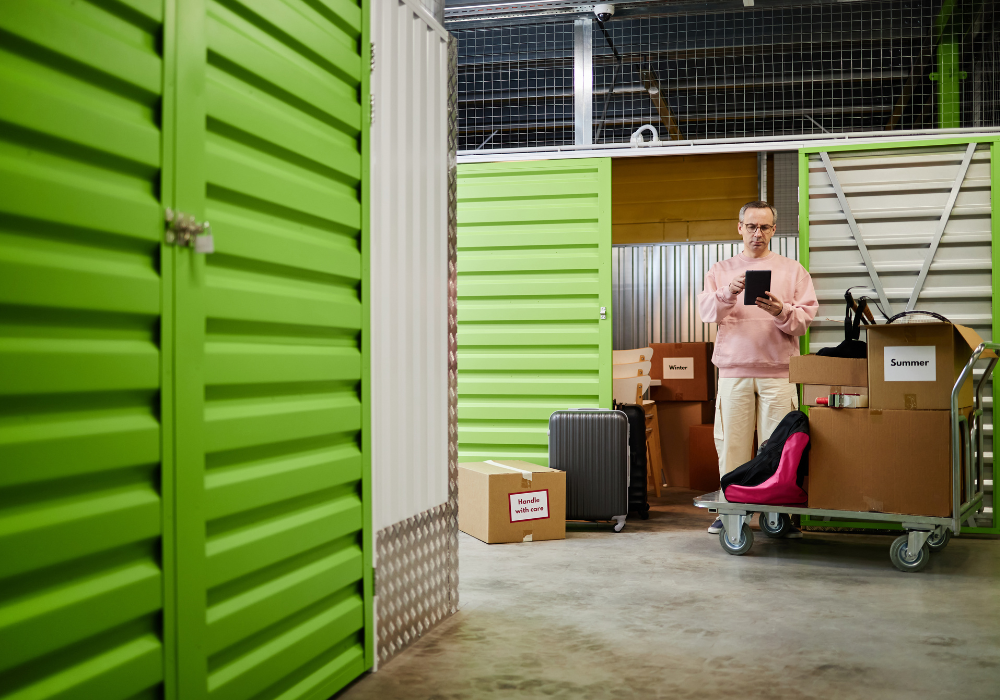
Storage isn't something everyone needs, but there are some very common situations in Newcastle where it makes life much easier.
- Your completion dates don't match. If you sell your flat in Jesmond before your purchase in Whickham completes, storage bridges the gap while you stay with family or rent short term.
- You're renovating. Plenty of buyers take on Tyneside flats and Victorian terraces in Heaton, Sandyford or Fenham that need work. Storing furniture keeps it safe from dust and gives builders room to work.
- You're downsizing. Moving from a large house in Ponteland or Darras Hall to a smaller home can mean you have more furniture than space. Storage gives you time to decide what to keep, sell or pass on.
- You're relocating for work. If you're moving to Newcastle and renting first while you get to know areas like Tynemouth, Gosforth or Low Fell, you can store most of your things until you buy.
- You're moving abroad or between countries. Storage is useful if you're working overseas for a fixed period and plan to come back to the North East.
- Students and graduates. With Newcastle University and Northumbria University in the city, summer storage is popular when tenancies end in June and new ones start in September.
Self storage or containerised storage: Which suits you?
Both options are secure, but they work in slightly different ways.
Self storage suits you if you'll want to visit regularly, perhaps to swap seasonal clothes, collect paperwork or store stock for a small business. You'll need to transport everything yourself or hire a van, and you'll do the loading and unloading.
Containerised storage suits you if you're storing the contents of a home as part of a move and don't need frequent access. A removals team packs and loads your belongings at your home, seals them into containers, and keeps them in a monitored facility. When your new home is ready, everything is delivered and unloaded for you. It means fewer trips and less handling, which reduces the chance of damage.
Some people use both: a small self storage unit for things they'll need often, and containerised storage for the bulk of the household.
How do you choose a storage facility in Newcastle?
Once you know the size and type of storage you need, a few practical checks will help you pick the right provider.
What security does it have?
Look for CCTV, alarmed units or buildings, gated access with individual codes, good lighting and on-site staff during opening hours. Don't be shy about asking how the site is monitored at night.
How easy is it to get to?
If you'll visit often, think about the route. A facility just off the Coast Road, the Central Motorway or the Western Bypass is much easier to reach than one that means crossing the Tyne Bridge at rush hour. Check parking, loading bays, trolleys and lifts too.
What are the access hours?
Some sites offer 24-hour access, others are open during set hours. Match this to your routine, especially if you work shifts.
What does the contract say?
Check the minimum term, the notice period, how and when prices can rise, and what happens if a payment is late. A clear, simple contract is a good sign.
What do other customers say?
Read recent reviews, and if you can, visit before you commit. A clean, dry, well-kept building tells you a lot.
How should you pack for storage?
Good packing protects your belongings and helps you fit more into a smaller unit, which saves you money.
- Use sturdy, same-sized boxes. They stack neatly and safely. Avoid supermarket boxes that can collapse under weight.
- Don't overfill or underfill. Heavy items like books go in small boxes; lighter items like bedding go in larger ones. Fill gaps with paper so boxes don't crush when stacked.
- Label every side. Write the contents and the room on each box, and keep a simple inventory on your phone.
- Dismantle furniture. Take beds and tables apart, wrap the legs, and put screws and fittings in a labelled bag taped to the item.
- Clean and dry everything. Make sure fridges and freezers are defrosted and completely dry, and leave their doors slightly open to prevent mould.
- Protect soft furnishings. Use breathable covers for sofas and mattresses rather than sealing them tightly in plastic for long periods.
- Plan the layout. Put items you won't need at the back and things you might want near the front, leaving a small walkway if you can.
What can't you put in storage?
Most facilities won't accept perishable food, flammable liquids, gas bottles, paint thinners, fireworks, plants, or anything illegal. Valuables such as cash, jewellery and important documents are usually better kept with you. Check your provider's list before you pack.
How can you keep your storage costs down?
- Declutter before you move, so you're not paying to store things you'll never use again. Local charity shops and furniture reuse schemes across Newcastle are often glad of good-quality items.
- Measure and list your belongings, then choose the smallest unit that fits.
- Ask about offers for longer stays or introductory discounts.
- Check whether your contents insurance already covers items in storage.
- Book storage as part of your removal, so collection, storage and delivery are planned together.
For more moving advice, have a look at Hoults blog and our guide to Newcastle upon Tyne removals.
Frequently asked questions
1. How much does self storage cost in Newcastle?
It depends on the unit size, how long you store for, the facility's location, insurance and extras such as padlocks and VAT. The best approach is to work out the size you need, then ask several providers for a full written quote.
2. What size storage unit do I need for a three-bedroom house?
Most three-bedroom homes fit into roughly 75 to 100 sq ft, about the size of a single garage, if you pack well and stack boxes. A house with lots of large furniture or garden equipment may need more.
3. Do I need insurance for my storage unit?
Most facilities require it. You can usually buy cover from the provider, or check whether your existing home contents insurance includes items kept in storage.
4. Can I access my belongings while they're in storage?
With self storage, you can visit during the facility's access hours. With containerised storage, access is usually arranged in advance with the storage company.
5. How long can I keep things in storage?
Most contracts roll on weekly or monthly, so you can store for as long as you need, from a couple of weeks to several years. Check the notice period before you sign.
Need storage as part of your move?
If you're moving in or around Newcastle and your dates don't quite line up, storage can make the whole process calmer. At Hoults, we offer secure containerised storage in our alarmed, monitored facility, with packing, collection and delivery to your new home all handled by our team. If you'd like to talk it through, have a look at Hoults storage or get in touch and we'll be happy to help you plan.